
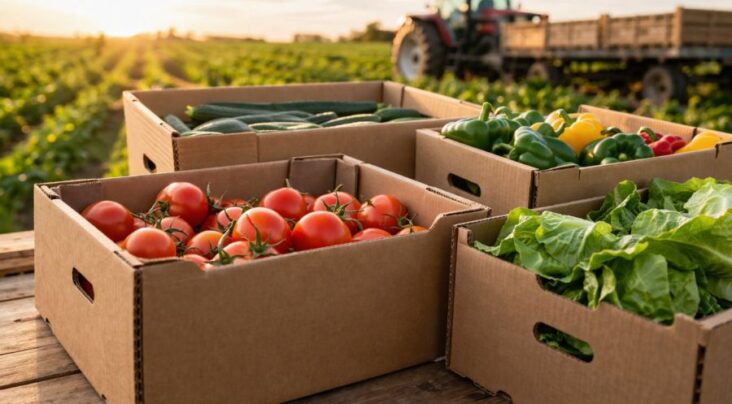
Agricultural and horticultural producers face packaging challenges that differ from most other sectors. Products are perishable, irregular in shape, variable in size between harvests, and frequently destined for multiple distribution channels simultaneously: wholesale market, direct retail, farm shop, and increasingly direct-to-consumer box scheme. Packaging that works across these channels without requiring a different solution for each is both a logistical challenge and a cost management opportunity.
Corrugated packaging has been used in agriculture for decades, and for good reason. It is strong enough to protect produce through the handling stages of a distribution chain, breathable enough not to accelerate deterioration through condensation, and light enough not to add significant weight to perishable shipments. Understanding how to specify it correctly for agricultural applications makes a meaningful difference to both produce quality and packaging cost.
Ventilation and Breathability
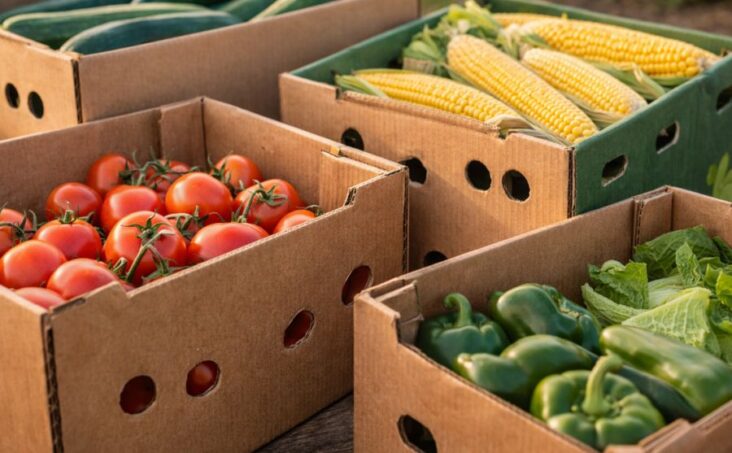
The most important structural consideration for produce packaging is ventilation. Fruits and vegetables continue to respire after harvest, producing heat and moisture. Packaging that traps this heat and moisture accelerates deterioration. Corrugated cases designed for produce typically include ventilation holes, cut at specific positions in the box walls to create airflow during storage and transit.
The size, position, and quantity of ventilation holes is not arbitrary. Boxes intended for cold chain storage and transit are designed to allow airflow across the produce when stacked on pallets in a refrigerated environment. The holes align between stacked cases to create vertical airflow channels. A box that looks similar to a ventilated produce box but with holes in different positions may not perform as well in actual cold chain conditions.
When specifying corrugated cases for produce, request evidence that the ventilation design has been tested in relevant storage and transit conditions. A corrugated packaging supplier with experience in fresh produce will have this data readily available.
Stacking Strength for Cold Chain Palletisation
Corrugated boxes lose stacking strength when moisture penetrates the board. In cold chain environments, condensation is a constant risk, particularly when product moves between temperature zones. A pallet of produce boxes that has been in cold storage and then moved to ambient conditions will experience significant condensation on the outer surface of the boxes.
Stacking strength specifications for produce boxes need to account for this moisture exposure. Board grades that maintain an adequate proportion of their dry stacking strength when wet are available, and the specification should reference a wet stacking strength figure rather than dry stacking strength alone.
For high-value produce or produce that is stacked more than two pallets high, it is worth testing stacking performance under realistic conditions rather than relying solely on manufacturer specifications. The cost of a stack failure in terms of produce loss and labour far exceeds any saving on board specification.
Waxed versus Non-Waxed Board
Historically, waxed corrugated was widely used for produce that required regular washing during distribution, such as certain root vegetables. Wax coating provides water resistance that standard corrugated board does not.
The sustainability limitation of waxed corrugated is significant. Wax-coated board is difficult to recycle, and in many markets it must be landfilled or composted rather than entering the corrugated recycling stream. As sustainability requirements tighten, waxed corrugated has become less viable.
Alternatives have improved substantially. Water-resistant liner treatments and plastic-free moisture barrier coatings now provide meaningful protection without the recycling penalty. For producers under pressure to demonstrate packaging sustainability, these alternatives are worth considering even if they carry a modest cost premium over standard board.
Sizing for Variable Harvest Weights
Agricultural produce is not dimensionally consistent between harvests. A cauliflower harvested in October is not the same size as one harvested in July. The box that fits the product in peak season may leave excessive void space in early or late season, creating movement that bruises produce.
One approach is to use internal packaging, shredded paper or moulded fibre dividers, to fill void space during smaller harvest periods. Another is to specify two or three box sizes for the same product and use whichever fits best for the current harvest weight. This approach requires more packaging SKUs to manage but may reduce damage and maintain presentation quality more consistently.
A third approach, used by larger producers, is to design boxes with a degree of adjustable depth. This is more complex to manufacture and requires careful structural design, but can provide a single solution across a range of fill weights.
Direct-to-Consumer Produce Boxes
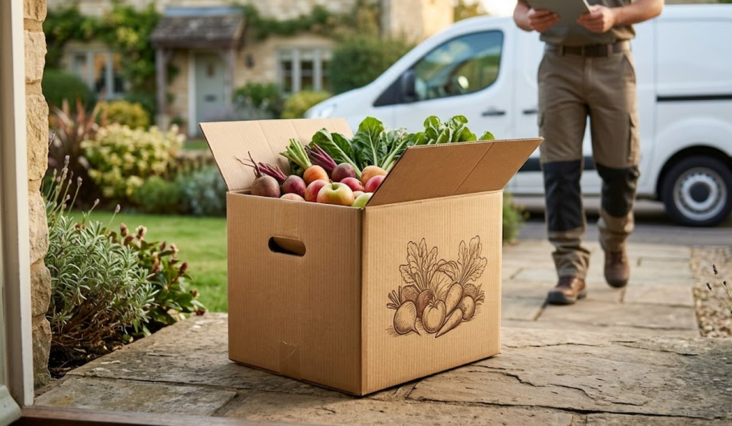
The veg box and food subscription model has grown significantly in UK agriculture. Producers supplying directly to consumers need packaging that performs in the postal and courier network rather than in a palletised cold chain environment.
Consumer-facing produce boxes have different requirements from wholesale produce cases. They need a reasonable standard of exterior presentation, since the box is the first thing the customer sees. They need structural integrity for courier handling, which is rougher than warehouse handling. And they need to be easy for a consumer to open and dispose of responsibly.
A corrugated packaging supplier with experience in both agricultural and e-commerce packaging can help specify a box that works across both channels, or a pair of related boxes optimised for each, without requiring a completely separate design and tooling investment for each application.
Certification and Traceability
Food-contact corrugated packaging should carry BRC Packaging and Packaging Materials certification, which covers the management of physical, chemical, and biological contamination risks in the manufacturing process. For produce that is certified organic or to other schemes, some buyers require packaging that is also certified to the relevant standard.
FSC certification covers chain of custody in the timber supply chain, from forest to finished product. For producers making sustainability claims about their packaging, FSC certification provides a recognised and verifiable basis for those claims.
Both certifications should be available from any manufacturer supplying into food retail. Requesting evidence of current certification at the specification stage prevents compliance issues later.
Planning Packaging Procurement Around the Growing Season
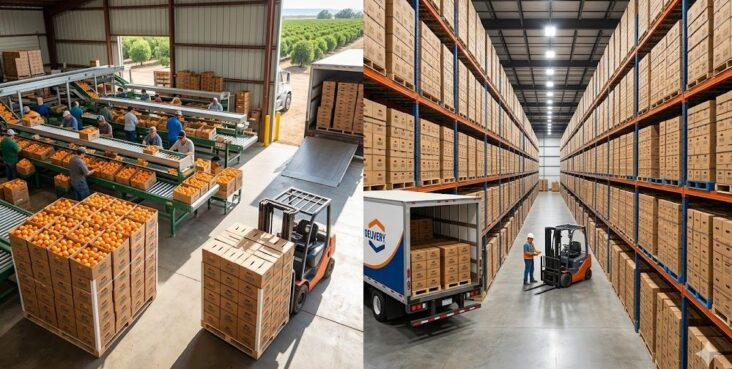
Packaging procurement for agricultural businesses often needs to account for seasonal volume swings. A producer who needs 10,000 cases per month in peak season and 2,000 in the off-season cannot efficiently manage that range through a single delivery at the start of the year.
A call-off arrangement with a manufacturer, where a full season’s requirement is designed and tooled at the start of the year and then drawn down in deliveries timed to harvesting schedules, provides the cost efficiency of volume commitment without the storage and cash flow burden of holding a full season’s stock at once.
This model requires a good relationship with a manufacturer who is willing to hold finished stock on behalf of their customer, which is a service most domestic manufacturers offer for established clients.